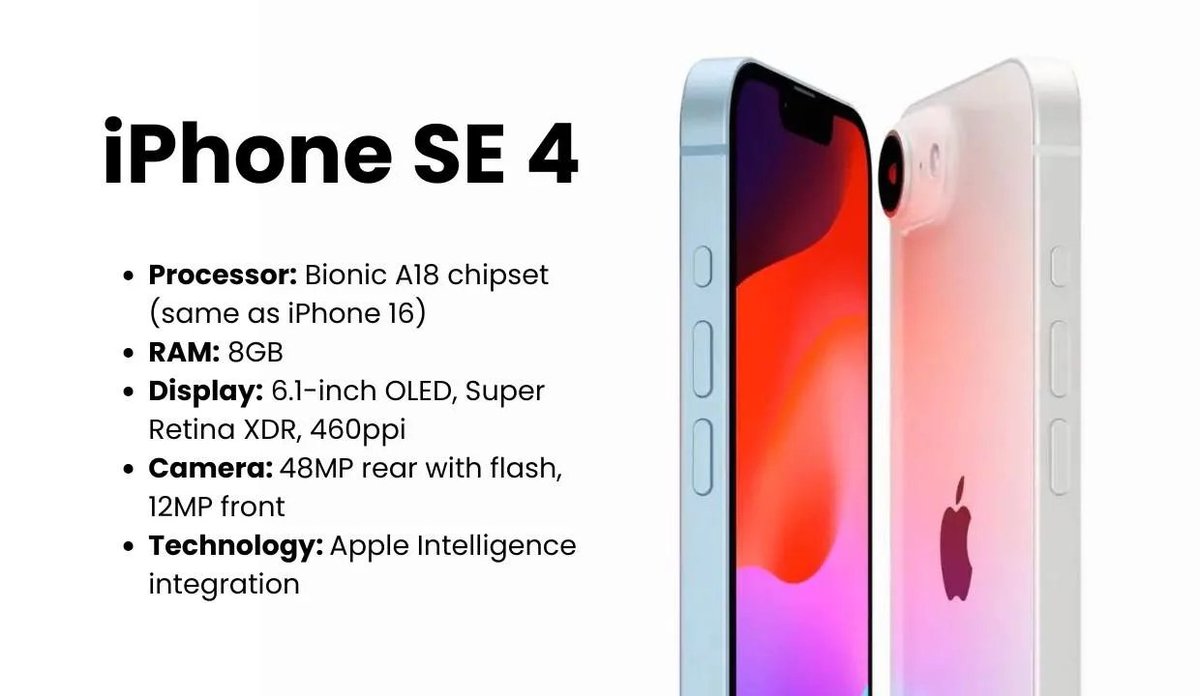
As the tech world buzzes with anticipation, the upcoming iPhone SE 4 is shaping up to be more than just Apple’s budget-friendly option. It's poised to redefine the mid-range smartphone segment, with iPhone SE 4 price predictions hinting at a strategic increase that directly impacts its value proposition. For anyone eyeing a powerful, long-lasting iOS experience without shelling out flagship money, understanding where this device stands on cost and capability is crucial. Let's dig into what the rumors are telling us and what that means for your wallet and your daily tech life.
At a Glance: What We Know About the iPhone SE 4
- Expected Launch: Early 2025 (rumors suggest February 19 or March).
- Predicted Starting Price: $499 for the 128GB base model.
- Price Increase: A $70 jump from the previous iPhone SE 3 ($429).
- Key Upgrades:
- 6.1-inch OLED display (replacing LCD, similar to iPhone 14).
- Face ID (replacing Touch ID/Home button).
- USB-C charging port.
- A18 Bionic chip (same as upcoming iPhone 16 series).
- 8GB of RAM.
- Potential support for Apple Intelligence.
- Strategic Positioning: Direct competitor to mid-range Android phones like Google Pixel 7a and Samsung Galaxy A55.
- Rebranding Rumor: Could be named “iPhone 16E.”
- Why the Price Hike? Significant component upgrades and industry-wide cost increases.
The iPhone SE Legacy: Apple's Gateway to Greatness
Before we dive into the nitty-gritty of the next generation, it’s worth remembering why the iPhone SE line exists. Apple has always understood that not everyone needs or wants to spend over a grand on a smartphone. The SE series was born from the desire to offer the core iOS experience – robust performance, unparalleled software support, and access to Apple’s vast ecosystem – in a more accessible package. It typically recycled older designs with newer internals, striking a delicate balance between cost and capability.
The iPhone SE has traditionally been the go-to for first-time iPhone owners, those upgrading from much older models, or users who simply prefer a compact device. This historical context is vital when evaluating the rumored changes for the iPhone SE 4, as it represents a significant departure from this "retro body, modern brain" formula.
Unpacking the Expected Price Tag: $499 and Why It Makes Sense
The most prominent headline surrounding the iPhone SE 4 is its anticipated $499 starting price for the 128GB base model. This marks a $70 increase from its predecessor, the iPhone SE 3, which launched at $429. On the surface, a price hike might seem counterintuitive for a "budget" phone. However, when you look at the rumored upgrades and the broader industry landscape, this adjustment isn't just justifiable; it's a calculated move.
Firstly, smartphone component costs are on an upward trend. Manufacturing advanced chips, high-quality displays, and sophisticated sensors simply costs more today than it did a few years ago. Apple, like every other manufacturer, has to account for these rising expenses.
Secondly, the "budget" label for the SE series has always been relative to Apple's own premium devices. At $499, the iPhone SE 4 isn't just competing with other iPhones; it's strategically positioned to go head-to-head with popular mid-range Android devices. Think Google's Pixel 7a or Samsung's Galaxy A55. For Apple to truly compete in this segment, it needs to offer a compelling feature set that justifies the price and stands out against the Android crowd. The rumored upgrades are precisely designed to do that.
Feature Evolution: What You're Getting for the Price
The $70 price bump isn't just for show; it's directly tied to a laundry list of significant hardware enhancements that elevate the iPhone SE 4 far beyond its predecessors. This isn't a minor refresh; it's a re-imagination of the SE line.
Display Revolution: From LCD to a Vibrant OLED
Perhaps the most impactful upgrade is the move from an LCD panel to a stunning 6.1-inch OLED display. This isn't just a slight improvement; it's a night-and-day difference in visual quality. OLED technology, similar to what you'd find on the iPhone 14 series, offers:
- Richer Colors: More vibrant and true-to-life hues.
- Deeper Blacks: Individual pixels can turn completely off, creating true black levels and infinite contrast.
- Improved Power Efficiency: OLED panels consume less power, potentially extending battery life.
This upgrade alone dramatically changes the user experience, bringing the SE 4 visually closer to Apple's flagship devices and making media consumption, gaming, and general browsing a much more immersive experience. It's a huge step up from the older, smaller LCDs of previous SE models.
Security & Interaction: Embracing Face ID and USB-C
Another monumental shift is the adoption of Face ID. This means the physical home button and its integrated Touch ID sensor are finally gone. While Touch ID has its fans, Face ID offers a more modern, seamless, and secure authentication method. This change also implies an edge-to-edge display design, aligning the SE 4 with the contemporary look of current iPhones.
Adding to the modernization, the iPhone SE 4 is expected to feature a USB-C charging port. This move, already seen in the iPhone 15 lineup, means you can use the same cable for your iPhone, iPad, and Mac, simplifying your charging setup and adhering to evolving industry standards. No more rummaging for a Lightning cable if the rest of your tech has moved on.
Under the Hood Powerhouse: A18 Chip and Apple Intelligence
The iPhone SE 4 won't just look newer; it'll perform like a beast. It's rumored to be powered by Apple's A18 chip, the very same silicon expected to drive the upcoming iPhone 16 lineup. Paired with 8GB of RAM, this means the SE 4 will boast truly flagship-level performance.
What does that mean for you?
- Blazing-fast app launches: Apps will open instantly and run smoothly, even demanding games and productivity tools.
- Seamless multitasking: Switching between multiple applications will be fluid and responsive.
- Future-proof processing: The A18 chip ensures the phone will handle future iOS updates and new apps with ease for many years to come.
Crucially, the A18 chip is also expected to enable support for Apple Intelligence, Apple’s suite of generative AI features. This is a massive selling point, especially considering that older flagship devices like the iPhone 14 Pro and iPhone 14 Pro Max won't support Apple Intelligence. Getting this cutting-edge AI capability in a mid-range phone significantly boosts its long-term appeal and value.
5G Connectivity: The Modem Mystery
When it comes to 5G connectivity, the rumor mill offers a couple of interesting possibilities. One report suggests Apple will finally switch to its own in-house 5G modem. This move would grant Apple greater control over performance, power efficiency, and cost, potentially helping to keep the SE 4's price under $500 while optimizing its wireless capabilities.
However, another rumor points to the integration of Qualcomm’s latest 5G modem. Qualcomm modems are renowned for their performance and reliability. Regardless of which vendor Apple chooses, you can expect robust and fast 5G connectivity, a standard feature for any modern smartphone, ensuring quick downloads, smooth streaming, and reliable online gaming.
The Camera Question: Focus on the Core
While the iPhone SE 4 is getting significant upgrades in display and performance, the camera system is expected to remain true to its SE roots: a single, high-quality rear camera. Previous SE models have consistently demonstrated that Apple can deliver excellent photographic results with a single lens, thanks to its advanced computational photography.
You might not get the versatility of ultrawide or telephoto lenses found on Pro models, but you can anticipate sharp, vibrant photos and reliable video, particularly in good lighting. For most users, a single, excellent camera is more than sufficient, and focusing on a single sensor helps keep manufacturing costs down.
The Strong Value Proposition: Why the iPhone SE 4 Might Be Your Next Smart Investment
Given the $499 price tag, the iPhone SE 4 isn’t just a "cheap iPhone"; it’s positioning itself as a compelling value proposition. It's an investment that promises a high-end experience at a mid-range price point, especially when you consider Apple’s unique strengths.
The Apple Ecosystem Advantage
When you buy an iPhone, you’re not just buying a piece of hardware; you’re buying into the Apple ecosystem. This means:
- Seamless Integration: Your iPhone works flawlessly with your iPad, Apple Watch, Mac, and AirPods. Handoff, AirDrop, and Universal Clipboard are everyday conveniences.
- Robust App Store: Access to millions of high-quality apps and games, often optimized first for iOS.
- Privacy & Security: Apple's strong stance on user privacy and regular security updates provide peace of mind.
- Services: Apple Music, Apple TV+, iCloud, Apple Arcade – a suite of services designed to enhance your digital life.
This holistic experience often outweighs raw spec comparisons for many users, and the SE 4 offers full access to it.
Unmatched Longevity and Software Updates
One of Apple's undeniable competitive advantages is its commitment to software updates. An iPhone SE 4, with its powerful A18 chip, is practically guaranteed to receive iOS updates for 5-7 years, if not more. This means your $499 investment won't feel outdated after just two or three years.
Compare this to many Android counterparts, where software support often tapers off after 2-3 years, and even premium Android phones typically offer 4-5 years of major OS updates. The iPhone SE 4 offers superior longevity, making its total cost of ownership incredibly attractive over time.
Flagship Performance for a Mid-Range Price
The inclusion of the A18 chip is arguably the SE 4's most powerful value driver. You’re getting the same foundational processing power as Apple's next flagship series (iPhone 16) in a device costing significantly less. This translates directly into:
- Exceptional speed and responsiveness: The phone will feel fast for years.
- Superior gaming performance: Modern mobile games will run smoothly.
- Advanced AI capabilities: Full access to Apple Intelligence, pushing the boundaries of what a "budget" phone can do.
No mid-range Android phone can currently compete with the raw performance and long-term future-proofing offered by an A18 chip.
Direct Competition: How It Stacks Up Against Mid-Range Android
Apple is clearly positioning the iPhone SE 4 to disrupt the mid-range Android market. Let's briefly compare it to some of its likely rivals:
- Google Pixel 7a (and future 8a): Known for its excellent computational photography and clean Android experience. The SE 4 will likely beat it on raw chip performance (A18 vs. Tensor G2/G3) and offer longer software support. However, Pixel often offers better camera versatility (e.g., ultrawide).
- Samsung Galaxy A55 (and similar A-series): Samsung offers vibrant displays and decent performance for the price. The SE 4 will likely surpass the A55 in raw processing power and potentially software longevity. Samsung often provides more cameras and features at similar price points.
The iPhone SE 4's primary competitive advantages against these Android phones are its A18 chip, superior long-term software support, and the cohesive iOS ecosystem, bolstered by the new OLED display and Face ID.
Is It Worth the Wait? Navigating the Release Landscape
The rumor mill pegs the iPhone SE 4's launch for early 2025, with specific dates like February 19 or March 2025 being floated. If you're currently in the market for a new phone and considering your options, this timing is crucial.
If you need a new device immediately, you might consider current iPhone 13 or 14 models, or even the existing iPhone SE 3, though these lack the major upgrades of the upcoming model. However, if your current phone can hold out for a few more months, waiting for the SE 4 appears to be a very wise decision. The significant leap in features, especially the OLED screen and A18 chip, makes holding off worthwhile. For all the granular details on when you can expect to get your hands on this device, keep an eye on Upcoming iPhone SE 4 release details.
Rebranding Rumors: iPhone 16E?
There's also intriguing speculation that Apple might rebrand the iPhone SE 4 as the "iPhone 16E." This would be a significant shift from the traditional "SE" moniker and could signal a deeper strategic integration into Apple's main flagship lineup.
What would an "iPhone 16E" mean?
- Clarity in Product Lineup: It could help consumers understand that this phone shares the latest internal technology (like the A18 chip) with the flagship iPhone 16 series, even if it comes in a slightly simpler package.
- Elevated Perception: Moving away from "SE" (Special Edition) might reduce any lingering perception of it being a "lesser" iPhone, instead framing it as an "Essential" or "Economical" version of the current flagship generation.
- Strategic Alignment: This would further emphasize its role as a mid-range contender designed to bring modern Apple tech to a broader audience, rather than just being a budget-focused outlier.
While still a rumor, such a rebranding would align perfectly with Apple's apparent strategy to make the SE 4 a more powerful and integrated part of its portfolio.
Who Is the iPhone SE 4 For? Your Decision Guide
With these predicted prices and upgrades, the iPhone SE 4 carves out a very specific, yet broad, niche. Are you the ideal candidate for this device?
You Might Love the iPhone SE 4 If:
- You're on a budget but want the iOS experience: You need an iPhone but can't justify the cost of a Pro model.
- You're upgrading from an older iPhone: If you're currently using an iPhone 8, X, XR, 11, or even an older SE, the iPhone SE 4 will feel like a massive upgrade in every conceivable way – speed, screen, battery, and features.
- You're an Android user considering a switch: The SE 4 offers a perfect entry point into the Apple ecosystem, providing flagship-level performance and long-term support at a competitive price compared to many Android alternatives.
- You value longevity and security: You want a phone that will receive regular software updates and security patches for many years to come.
- You appreciate powerful performance without all the bells and whistles: You prioritize a fast, smooth experience and features like Apple Intelligence over multiple camera lenses or ProMotion displays.
- You prefer Face ID and a modern full-screen design: You're ready to move on from the home button and embrace the gestures and security of Face ID.
You Might Want to Look Elsewhere If:
- You're a professional photographer or videographer: The single camera won't offer the versatility (ultrawide, telephoto, LiDAR) of Pro models.
- You demand the absolute latest flagship features: Things like ProMotion (120Hz refresh rate), always-on display, or premium materials might still be exclusive to the Pro series.
- You already own a recent flagship iPhone (13, 14, 15 series): The upgrades, while significant for the SE line, might not be enough to warrant an upgrade from an already modern flagship.
- You have a very tight budget below $499: You might need to consider older refurbished iPhones or entry-level Android devices.
Potential Trade-offs and What to Consider
While the iPhone SE 4 is a huge leap forward, it’s still designed to be more affordable than Apple's premium lineup. This means some trade-offs are inevitable.
- Single Rear Camera: As mentioned, you’ll get a great main camera, but not the ultra-wide or telephoto lenses that offer more photographic flexibility. For casual photographers, this is rarely an issue, but enthusiasts might miss the options.
- Standard Refresh Rate Display: While a 6.1-inch OLED is a massive upgrade, it’s highly probable it will be a standard 60Hz panel, not the ProMotion 120Hz display found on Pro iPhones. This means scrolling and animations won't feel quite as fluid as on the most expensive models, though most users won't notice or be bothered by this.
- Familiar Design Language: The iPhone SE 4 is expected to adopt the design of the iPhone 14. While modern, it won't feature the Dynamic Island or other cutting-edge design elements of the latest flagship iPhones.
- Potentially Thicker Bezels: To keep costs down, the bezels around the display might be slightly thicker than those on current Pro models, though still a vast improvement over previous SE iterations.
These trade-offs are standard practice for a mid-range device aiming for an aggressive price point. They do not detract from the core value proposition but are important to note if you're accustomed to premium flagship features.
Making Your Decision: Beyond the Price Tag
Ultimately, choosing your next smartphone is about aligning the device's capabilities and cost with your personal needs and budget. The iPhone SE 4, with its anticipated $499 price and impressive list of upgrades, presents a compelling argument for value. It's not just about the initial cost, but also about the long-term benefits: consistent performance, years of software updates, and seamless integration into a robust ecosystem.
Think about what you truly use your phone for. Do you need a professional camera setup, or is a great single lens sufficient? Do you prioritize raw speed and longevity, or cutting-edge design features? The iPhone SE 4 is shaping up to be a highly capable device that democratizes much of Apple’s latest technology.
Final Thoughts: Apple's Strategic Mid-Range Play
The iPhone SE 4 isn't just another incremental update; it's a statement. By bringing a 6.1-inch OLED display, Face ID, USB-C, and the A18 Bionic chip (plus Apple Intelligence support!) to a $499 price point, Apple is making a very clear play for the mid-range smartphone market. This isn't just about offering a cheaper iPhone; it's about offering a genuinely modern iPhone experience at a price that challenges Android competitors head-on.
For consumers, this means more choice and more value. The iPhone SE 4 promises to be a powerful, long-lasting, and feature-rich device that punches well above its price tag. If you're waiting for the right moment to jump into the iOS ecosystem, or simply need an affordable upgrade that doesn't compromise on core performance, the upcoming iPhone SE 4 with its strong value proposition might just be the device you've been waiting for. Keep an eye out for its early 2025 arrival, as it's set to shake up the smartphone landscape.